Feeling Seen by a Server: The Billion-Dollar Scam of Selling Loneliness Back to the Lonely
Somewhere in a San Francisco office park — the kind with exposed brick and a kombucha tap nobody actually uses — a product team is workshopping the phrase "emotionally intelligent AI companion." They're debating font choices for the onboarding screen. They're A/B testing whether the chatbot should say "I hear you" or "That sounds really hard." They are not, notably, licensed therapists. They are, however, extremely good at raising Series B funding.
Welcome to the AI mental health industrial complex, where your breakdown is a product opportunity and your most vulnerable 2 AM confession is, legally speaking, training data.
The Math That Should Make You Furious
Here's a number that will ruin your afternoon: the average cost of a single therapy session in the United States runs somewhere between $100 and $300 out of pocket. The average American — the one who actually needs mental health support, not the one who can casually expense "wellness" on a corporate card — sees a therapist maybe four times before the credit card bill makes the decision for them.
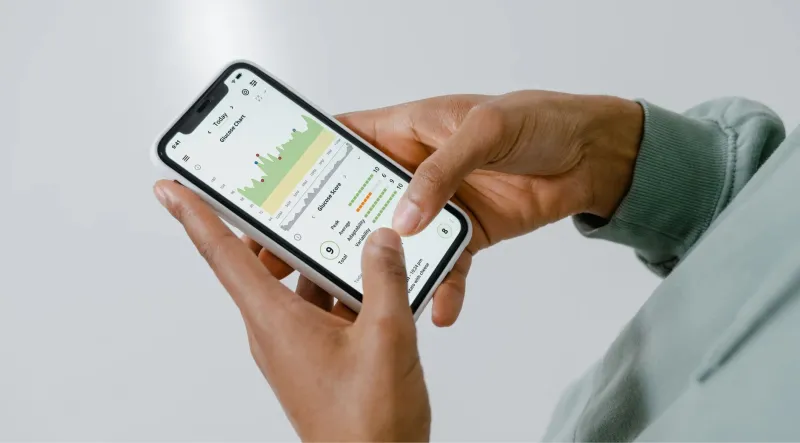
Meanwhile, apps like Wysa, Woebot, and the suspiciously named Replika are offering unlimited emotional availability for anywhere between free and thirty bucks a month. The pitch is seductive in the way that all great scams are seductive: finally, something that makes sense financially. A chatbot that never cancels, never judges, never glances at the clock at the forty-five-minute mark. A listener that costs less than a streaming service.
The problem isn't that these apps exist. The problem is what they're replacing — and what they're quietly harvesting in the process.
Your Pain, Productized
Let's talk about what actually happens when you type "I haven't felt like myself in months" into a chat interface at midnight. You feel, briefly, like something has heard you. The bot responds with warmth-adjacent language, asks a follow-up question, maybe suggests a breathing exercise. It's not nothing. Isolation is genuinely corrosive, and the act of articulating distress — even to a language model — can provide momentary relief.
But here's what else happens: that confession gets logged. Processed. Fed into systems designed to make the next interaction stickier, more emotionally resonant, more likely to convert a free user into a paying subscriber. Your 2 AM crisis is, in the vocabulary of the companies building these tools, a "high-engagement moment." The algorithm learns what kind of pain keeps you coming back. It optimizes for retention.
This is not a conspiracy theory. It is a business model.
Replika, to use the most infamous example, spent years building users into deep parasocial dependencies — people who genuinely grieved when the company abruptly removed the app's romantic relationship features in 2023. Users described losing their "best friend." Some reported feeling suicidal. The company's response was a blog post. The relationship, it turned out, had always been asymmetrical in the most brutal possible way: you were emotionally invested; they were monetarily invested. Guess which one had the leverage.
The Luxury Product You Can't Afford Is Called "Being Known"
Real therapy — actual, human, licensed clinical therapy — isn't valuable because therapists have magic words. It's valuable because of continuity. Because someone remembers that three months ago you mentioned your father, and they notice when you bring him up again in a completely different context. Because accumulated knowledge of a specific human being, held by another specific human being, is the actual mechanism through which therapeutic change happens.
AI therapy apps, almost universally, do not have persistent memory in any meaningful sense. You are, every session, a stranger to the machine. You explain yourself again. You re-establish context. You perform your trauma for an audience that has already forgotten the last performance.
This is not a technical limitation waiting to be solved. This is, in many cases, a deliberate design choice — because real memory creates real liability, and liability is expensive, and these companies are not in the business of expensive.
What they've done, with remarkable efficiency, is take the one thing that makes human connection irreplaceable — the accumulation of shared history, the experience of being genuinely known over time — and replaced it with the feeling of connection. A simulation. A very affordable simulation.
The affluent get actual therapists who remember their names. Everyone else gets a chatbot with a calming color palette and a push notification that says "Hey, we haven't talked in a while 💙."
The Crisis Underneath the Crisis
The surgeon general has declared loneliness a public health epidemic. A significant portion of American adults report having no close friends. The systems that used to generate incidental human connection — the third place, the neighborhood, the workplace that wasn't entirely remote — have been systematically dismantled or priced out of reach. People are genuinely suffering in ways that are structural, not individual.
Silicon Valley's answer to a structural problem is, predictably, an app. An app that generates revenue. An app that keeps you engaged with the app rather than with the conditions that made you need the app in the first place.
There's a particular cruelty in this that deserves to be named plainly: the same tech ecosystem that accelerated social fragmentation — that gave us algorithmic social media, gig-economy isolation, the dissolution of community into content — is now selling the treatment for the disease it spread. And calling it innovation.
What "Good Enough" Actually Costs
None of this is to say that AI mental health tools have zero value. For someone in genuine crisis with zero access to care, a chatbot that talks them through a panic attack at 3 AM is better than nothing. For someone with mild anxiety who needs low-stakes cognitive behavioral exercises, some of these apps are reasonably competent. "Better than nothing" is a real category.
But "better than nothing" should not be the standard we accept for mental health care in the wealthiest country in the history of human civilization. "Better than nothing" is what you say when you've given up on the actual thing.
The AI therapy boom is not a solution to the mental health crisis. It is a product that makes the mental health crisis more comfortable to ignore — for the people who fund the products, for the policymakers who should be expanding access to real care, and, eventually, for the users themselves, who learn to mistake the simulation for the substance.
You deserve to be remembered. You deserve a listener who knows your history, who has professional training, who operates under an ethical framework with actual teeth. You deserve the real thing.
The real thing, under the current system, costs $200 an hour.
The chatbot is $9.99 a month and it's very excited to hear how your week went.
And somewhere in that gap — that obscene, entirely political, completely solvable gap — an entire industry is getting very, very rich.