Cardboard Pornography: The Deeply Weird Reason You've Watched 40 Minutes of Strangers Opening Boxes
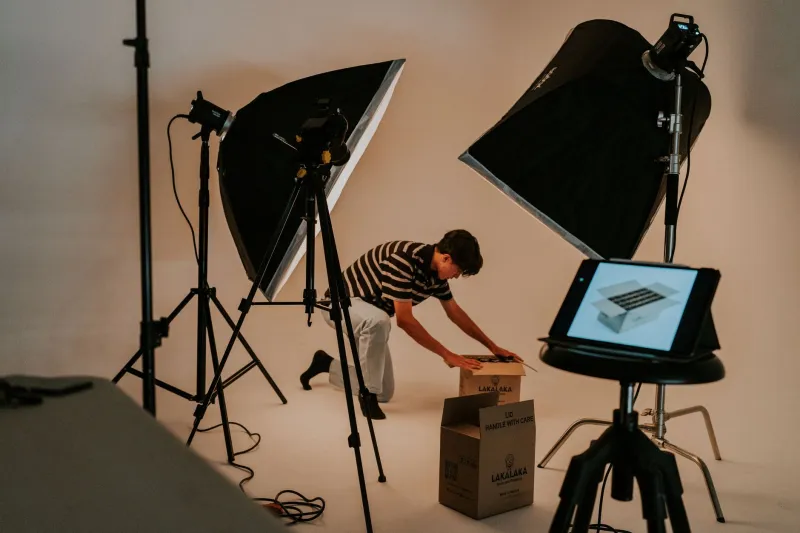
Let's just go ahead and say it out loud, in public, with our whole chest: you have watched someone open a box on the internet, and you liked it. Maybe it was a Pokémon card pack. Maybe it was a $400 mechanical keyboard you cannot afford and do not need. Maybe it was a "mystery box" filled with the kind of branded merchandise that ends up in a landfill within eighteen months. Doesn't matter. You watched. You kept watching. And when it was over, you clicked on another one.
Welcome to the unboxing economy — a content category so vast, so algorithmically entrenched, and so quietly embarrassing that it now generates billions of dollars in ad revenue while everyone who consumes it pretends they don't.
The Ritual That Shouldn't Work, But Does
Unboxing videos are, on paper, completely insane. The premise: a person receives an object. They remove the object from its packaging. They show you the object. That's it. That's the whole show. There are no characters, no narrative arc, no conflict resolution. The "plot" is literally just capitalism completing a transaction while you watch from the outside.
And yet. YouTube's most-watched unboxing channels have subscriber counts that dwarf the populations of mid-sized American cities. Ryan's World — a channel launched by a kid who was, at the time, literally three years old — made over $22 million in a single year by doing nothing but opening toys. The channel still runs. Children still watch it with the focused intensity of air traffic controllers.
This is not a niche. This is not a weird corner of the internet. This is the internet.
Your Brain Is Doing Something Embarrassing Right Now
Here's the uncomfortable neuroscience: your brain cannot fully distinguish between experiencing something and watching someone else experience it. Mirror neurons — the same little neurological freeloaders responsible for making you flinch when someone else stubs their toe — light up during vicarious reward scenarios. When the person on screen tears back that tissue paper and gasps at whatever's inside, your dopamine system does a small, polite version of the same celebration.
You got the hit without paying the $89.99 plus shipping.
This is why unboxing content sits at such a weird intersection with ASMR culture. The crinkle of packaging, the satisfying thwack of a magnetic lid closing, the tissue paper rustle — these aren't accidental. The better creators are essentially sound designers working in the medium of consumer goods. They know that a properly mic'd unboxing of a skincare set can send a significant portion of their audience into a near-dissociative state of relaxed pleasure. The product is almost beside the point. The ritual is the product.
The Algorithm Ate the Shopping Mall
There's a generational loss buried inside the unboxing phenomenon that doesn't get talked about enough. The American mall — that fluorescent cathedral of aspirational consumption — is dead or dying. The experience of wandering through a store, handling merchandise, coveting things you couldn't afford, absorbing the social theater of other people shopping: gone. Replaced by a warehouse fulfillment pipeline that deposits brown boxes on your porch like a very efficient, joyless stork.
Unboxing content is the mall experience, reassembled in video form. The window shopping is now a subscription feed. The aspirational browsing is now an autoplay queue. The socially ambient experience of watching other people want things — which turns out to be something humans genuinely need — has been digitized, optimized, and monetized into a content vertical with its own creator economy, its own brand partnership ecosystem, and its own increasingly absurd subgenres.
There are unboxing channels dedicated exclusively to: vintage fast food toys, "dumpster find" electronics, Japanese snack subscription boxes, luxury handbags, prison commissary hauls (this is real), and — God help us — unboxing videos of other unboxing videos. The format has become recursive. It has begun to eat itself.
Nobody Admits to This at Dinner
What makes the unboxing phenomenon genuinely fascinating from a cultural standpoint is the shame attached to it. People will freely admit to watching true crime content about actual murders. They'll cop to three-hour reality TV binges without blinking. But there's something about unboxing consumption that produces a specific, squirmy embarrassment — the sense that you've been caught doing something that reveals a little too much about your inner life.
Because it does. Watching unboxing content is an admission that the anticipation of getting something has become more compelling than actually getting it. That the fantasy of acquisition is, in some ways, more satisfying than the acquisition itself. That you have internalized the logic of consumer desire so completely that you can now experience it vicariously, at scale, for free, without ever having to deal with the subsequent disappointment of owning a thing.
The algorithm knows this. The algorithm has always known this. It figured out years ago that the gap between wanting and having is where all the good content lives, and it has been strip-mining that gap ever since.
The Box Is the Message
The brands figured it out too, which is why unboxing has quietly become one of the most powerful marketing formats in existence. Companies now design packaging specifically to be unboxed on camera — Apple's legendary "unboxing experience" wasn't an accident, it was a content strategy disguised as industrial design. The slow-sliding outer sleeve. The satisfying reveal. The way the product sits nestled in molded foam like it's being presented to a king. Every tactile detail engineered for the moment when someone points a camera at it.
You are not watching a person open a box. You are watching a piece of marketing content that has been reverse-engineered from the psychological architecture of anticipation, dressed up as authentic consumer experience, and delivered to you by an algorithm that has already sold your attention to the brand three different ways.
And you will watch the next one too. We all will. The cardboard isn't going anywhere.