Your Lizard Brain Is Scrolling TikTok at 2 AM and It's Running the Whole Show
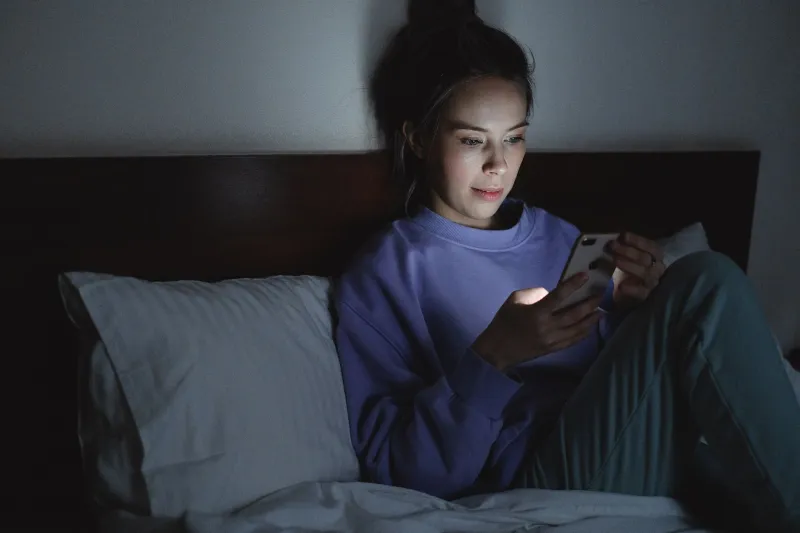
Let's be honest with each other for a second. You didn't mean to spend forty-five minutes watching a man in Ohio try to deep-fry a stick of butter shaped like Abraham Lincoln. Nobody means to do that. And yet, here we all are — glassy-eyed, thumbs twitching, completely unable to articulate why we just watched seventeen consecutive videos of people reacting to other people reacting to a sound that originated from a 2009 Romanian soap opera.
The answer, according to people who spent way more time in school than you did, is embarrassingly simple: your brain is broken. Or rather, it was never quite finished. Somewhere beneath the part of you that can appreciate Cormac McCarthy and parallel park, there is a much older, much dumber tenant that has been squatting in your skull since before your ancestors figured out fire. Neuroscientists call it the limbic system. Everyone else calls it the reptile brain. TikTok calls it their entire business model.
Meet Your Inner Iguana
Here's the deal with the so-called "reptilian brain" — it is not actually a separate lizard living inside your head, though honestly that would explain a lot. It's a cluster of ancient neural structures, including the amygdala and the brain stem, that evolved hundreds of millions of years ago to do exactly one thing: keep you alive by making you pay attention to anything sudden, unpredictable, or potentially dangerous.
A rustling in the bushes. A flash of movement in your peripheral vision. A man on your phone screen screaming for no discernible reason before cutting to a cat wearing a cowboy hat. Your primitive threat-detection system does not distinguish between these things. It simply fires. It says: look at that. Look at that RIGHT NOW.
Dr. Pamela Rutledge, director of the Media Psychology Research Center, has spent years studying exactly this phenomenon. "Novelty is a survival mechanism," she explained in a 2023 interview. "The brain is wired to orient toward anything unexpected because, evolutionarily speaking, unexpected things could kill you. Platforms like TikTok have essentially reverse-engineered that reflex and turned it into a content delivery system."
In other words, the algorithm isn't just smart. It's predatory. It has studied the precise frequency at which your ancient panic-response resets, and it is feeding you content at exactly that interval, forever, until you die or your phone battery runs out.
The Chaos Gradient: A Totally Real Scientific Concept We Just Made Up (But Also Kind Of Didn't)
Not all viral content is created equal. There's a spectrum — what behavioral researchers actually refer to as "arousal value" and what the rest of us would call the Chaos Gradient — that determines how hard a piece of content hits the limbic alarm system.
At the low end, you have satisfying videos. Pressure washing. Soap cutting. The oddly soothing corner of TikTok where people organize their refrigerators. These keep you watching because they mimic the completion of a task — your brain releases a small, polite amount of dopamine and says good job, we survived that refrigerator.
In the middle, you have the confusing stuff. The audio that doesn't match the visual. The punchline that never arrives. The video that starts mid-sentence. Your brain hates this. Your brain needs to resolve it. Your brain will watch fourteen follow-up videos trying to understand why a woman in Florida is crying while holding a raccoon in a Wendy's parking lot.
At the far end — the nuclear option — you have pure, weaponized absurdism. The Grimace Shake videos. The NPC trend. The one where people pretended to be mannequins in public places until strangers panicked. These are not random. These are content creators, whether consciously or not, directly stimulating the predator-detection reflex at maximum intensity. Your amygdala sees a human being acting like a malfunctioning robot and it simply loses its mind, because nothing in two hundred million years of evolution prepared it for this.
We Built the Cage and We Keep Walking Into It
Here's where it gets philosophically uncomfortable, which is the Krokodil Droga brand promise, so buckle up.
We know this is happening. The information is not hidden. There are TED Talks, bestselling books, congressional hearings, and at least four documentaries on Netflix about the exact mechanisms by which these platforms are exploiting our neurological vulnerabilities. We watched The Social Dilemma and then immediately opened Instagram to tell people we watched The Social Dilemma.
Dr. Nicholas Kardaras, a psychologist and author who has written extensively on screen addiction, puts it bluntly: "We are dealing with a public health crisis that looks like entertainment. The dopaminergic hijacking happening through short-form video platforms is clinically comparable to what we see in substance dependency. The difference is that society hasn't caught up to treating it that way yet."
And TikTok, to its credit (or its eternal damnation, depending on your perspective), is extraordinarily good at optimizing for this. The platform's recommendation algorithm — which ByteDance engineers have described as operating on a "multimodal" understanding of content — doesn't just track what you watch. It tracks how long you hesitate before scrolling. It tracks when you rewatch. It tracks the micro-pause before you decide not to share something. It is learning the shape of your attention in granular detail, and it is using that map to keep you inside the app with a precision that would make B.F. Skinner weep into his operant conditioning chamber.
So What, We Just Accept Our Reptile Overlords?
Look, nobody here is going to tell you to delete TikTok. That would be hypocritical, preachy, and also we have a TikTok account. What we will say is this: there is something genuinely worth mourning in the fact that the most sophisticated communication technology in human history is primarily being used to trigger the same neural circuit that helped our ancestors avoid getting eaten by wolves.
We built a global, instantaneous, borderless network of human minds — and we pointed it directly at the oldest, dumbest part of ourselves and said go nuts.
The trends will keep coming. The chaos will keep escalating, because escalation is the only direction the Chaos Gradient moves. Your lizard brain will keep watching, because that is what lizard brains do.
But maybe, just maybe, the slightly more evolved part of you — the part that's reading this right now instead of watching a man in a frog costume argue with a Roomba — can hold onto the awareness that you are being played. Not by some mustache-twirling villain. By mathematics. By the cold, indifferent optimization of a system that has no idea you exist as a person and only knows you as a pattern of hesitations and rewatch loops.
The reptile is real. The cage is real. The only thing that might be optional is forgetting that both of those things are true.
Now if you'll excuse us, we just got a notification about a new trend where people are apparently putting googly eyes on their cats and filming their reactions, and we are powerless against this information.