Your Favorite Creator Is Sobbing for the Algorithm and You're Tipping Them for It
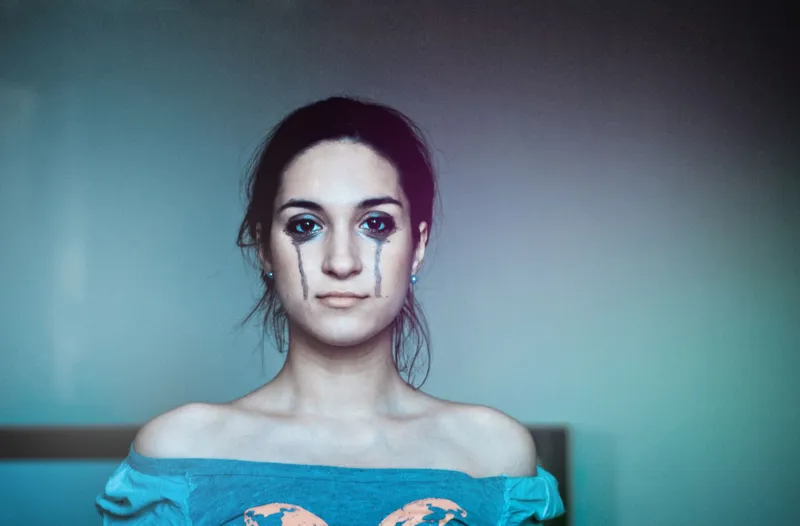
Somewhere right now, a person with ring lights, a Rode microphone, and a six-figure brand deal is crying into their camera. The mascara is running at just the right angle. The pause before they speak lasts exactly long enough to feel devastating. The caption will read something like "I wasn't going to post this, but you deserve to know the real me." By morning, it'll have four million views, a comment section full of crying emojis, and a Squarespace sponsorship stitched directly into the second half.
Welcome to the golden age of the content breakdown—where vulnerability is a deliverable, grief is a growth hack, and your empathy is the raw material being strip-mined for engagement metrics.
The Crying Industrial Complex
Let's be clear about something uncomfortable: not all of it is fake. Some creators are genuinely struggling. Mental health in the influencer economy is a documented disaster—isolation, constant performance pressure, the soul-hollowing experience of reducing your entire existence to content. Real suffering exists in this space.
But here's the thing the algorithm taught everyone very quickly: real suffering performs. And once you know that, the line between authentic pain and produced pain starts doing something deeply weird. It dissolves. It moves. It becomes a creative decision.
Research on parasocial relationships—those one-sided emotional bonds audiences form with media figures—shows that perceived vulnerability dramatically deepens attachment. When a creator cries, your brain doesn't fully register the camera, the lighting setup, or the fact that this person has 2.3 million followers and a team of editors. It registers: person in pain, must comfort, must support. Evolution didn't prepare you for this. You were built for campfires and small tribes, not for a 28-year-old in a Calabasas apartment who has optimized their nervous breakdown for maximum watch time.
The Content Calendar of Despair
Here's a rough sketch of how this actually works in practice, pieced together from creator confessions, industry insiders, and a depressing amount of YouTube analytics discourse:
Step one: The creator's engagement is slipping. The product reviews aren't hitting. The travel content feels hollow. The audience is drifting. This is a real crisis, by the way—losing algorithmic favor genuinely threatens livelihoods built entirely on platform attention. The anxiety is authentic.
Step two: Someone—the creator, their manager, their content strategist—notices that the last time numbers spiked was during that candid moment six months ago. The one where they talked about their anxiety. Or their breakup. Or their complicated relationship with their parents.
Step three: The decision gets made. Not necessarily in a cynical boardroom. Often it's more insidious—a quiet internal permission slip. I do feel bad. I could talk about feeling bad. People connect with that. It would help my numbers. It would also maybe help me process things. And just like that, therapy becomes content strategy.
Step four: The video goes up. The comments flood in. The Superchats roll. The Patreon tier called "Inner Circle" gets a dozen new subscribers. The brand that sells sleep supplements reaches out because their demographic skews toward people who are anxious and looking for solutions.
Step five: The creator posts a recovery update two weeks later. The arc is complete. The algorithm is fed. Repeat.
Case Studies in Profitable Anguish
You already know the examples. You've watched them. The creator who announced a "mental health break" with a twenty-minute video that somehow included a merch drop. The streamer whose emotional breakdown clip got clipped, spread across every platform, and quietly tripled their subscriber count. The lifestyle influencer whose divorce content outperformed every single piece of travel, fashion, or wellness content she'd made in three years combined—so she kept making it, for eighteen months, until the divorce became her entire brand.
None of these people are necessarily villains. That's what makes this so genuinely difficult to process. The system itself is the villain, and it has successfully recruited its own victims as its most effective salespeople.
The wellness-to-breakdown pipeline is particularly vicious. Creators who built audiences around self-optimization content—productivity, fitness, mindset—eventually hit a wall where performing wellness becomes unsustainable. When they crack, publicly, the audience rewards the cracking more than it ever rewarded the wellness. So now you have people who are professionally committed to being visibly broken, because that's what the audience showed up for.
What Your Empathy Is Actually Worth
Platforms aren't passive observers here. They engineered this. YouTube's recommendation algorithm has consistently favored emotionally intense content. TikTok's engagement weighting punishes creators who go quiet and rewards the ones who give you something to feel. The entire monetization structure—Super Chats, Tips, Memberships, Patreon tiers—is built on the premise that emotional proximity to a creator is a product you will pay for.
You are not donating to a friend in crisis. You are purchasing emotional access to a person who has learned, through a thousand data points, exactly how to make you feel like their friend in crisis.
This isn't entirely different from the mechanics of traditional celebrity culture—parasocial bonds are as old as fan magazines and radio personalities. But the scale, the intimacy, and the directness of the financial transaction are new. When you Super Chat a crying streamer, the money moves immediately. The feedback loop is instantaneous. The creator learns, in real time, that this particular configuration of emotional performance is worth exactly $847 on a Tuesday night.
The Audience Is Also Doing Something Weird Here
It would be convenient to frame this entirely as creators exploiting audiences, but that's only half the story. Audiences are active participants in this economy. They want the breakdown. They seek it out. They clip it, spread it, discuss it, and yes—they get something real from it.
In a culture where genuine community has been systematically defunded, where the third place is dead, where loneliness statistics keep climbing, watching someone cry on camera and feeling like you're there for them fills something. It's not nothing. It's a pale, monetized, algorithmically optimized shadow of human connection, but it's pointing at a real hunger.
The problem isn't that people want to feel connected to other people. The problem is that we've built an economy that intercepts that impulse and converts it into revenue before it can become anything real.
You Can't Opt Out, But You Can Look Directly at It
There's no clean exit from parasocial culture. It's baked into how media works now. But there's a version of engaging with it that doesn't require you to be a fully passive mark.
Next time a creator you follow drops a vulnerability video, sit with it for a second before you comment, share, or donate. Ask yourself: does this person have a team? A manager? A monetization structure that benefits from your emotional response right now? Is there a product mentioned in the second half of this video? Is there a Patreon link in the description?
None of those questions mean the person isn't suffering. They might be. They probably are, in some way. But suffering and strategy aren't mutually exclusive—and the fact that you can't tell the difference is the entire business model.
The algorithm doesn't care about your empathy. It just knows that empathy keeps you watching. And as long as you're watching, the crying will continue, right on schedule, right on brand, right on time.