Cry, Post, Repeat: The Carefully Engineered Meltdown Keeping Influencers Relevant
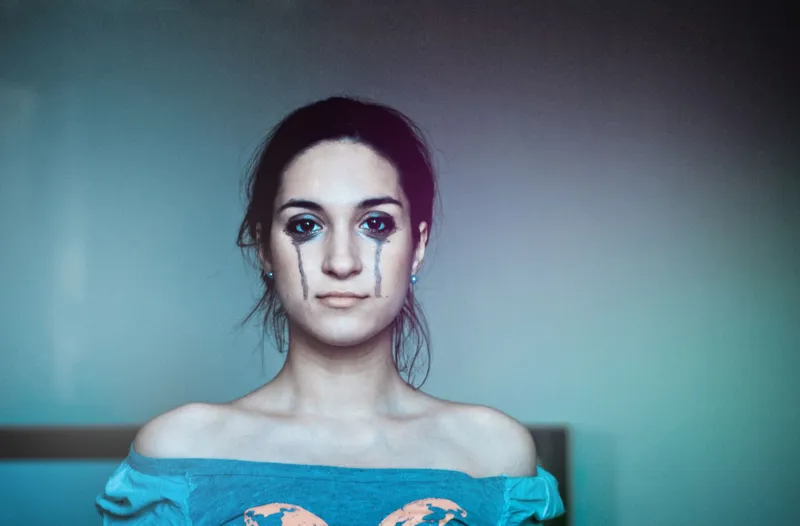
Somewhere right now, a person with ring light tan lines and a seven-figure brand deal is sitting in front of a camera, lower lip trembling, voice doing that specific broken thing that sounds like a middle school theater kid playing grief for the first time. They're about to tell you they've been doing a lot of reflecting. They're going to say the word journey at least three times. And by the end of the video, they will have sold you absolutely nothing — except the idea that they're human, which is, itself, the product.
Welcome to the Influencer Apology Industrial Complex, population: everyone with a ring light and something to lose.
The Formula Is Not a Secret Anymore (They Still Use It)
At this point, the apology video has a structure so rigid it could double as a film school syllabus. Open with no makeup or visibly disheveled hair — signaling authenticity through calculated imperfection. Pause meaningfully before speaking. Reference how hard the last few weeks have been, without specifying what, exactly, you did. Deploy the passive voice liberally: "mistakes were made," "people were hurt," "things happened" — subjects optional, accountability discouraged.
Then comes the pivot. The soft mention of therapy. The vague allusion to childhood trauma that contextualizes but, crucially, does not excuse the behavior (the distinction is stated explicitly, usually by the PR team's phrasing). A commitment to "do better" — a phrase so emptied of meaning it could be tattooed on a motivational poster in a Cheesecake Factory bathroom.
Finally: the ask. Not stated directly, obviously. But it's there in the lingering camera hold, in the comment section pinned with "I love you guys," in the merch drop that goes live forty-eight hours later. Forgiveness isn't the goal. Re-engagement is.
The PR Team Is the Real Auteur
Here's the thing nobody wants to say out loud: the most emotionally devastating influencer apologies you've ever watched were probably workshopped by a crisis communications firm with a client list that includes at least two senators and a pharmaceutical company. The tears might be real — stress is real, public humiliation is real — but the delivery of those tears, the timing of the upload, the length of the video, the choice to film in a car versus a bedroom versus a minimalist white kitchen? That's not grief. That's production design.
The really sophisticated operations don't even let the influencer write their own script. They'll hand them talking points, coach them on pacing, and advise them to avoid any specific language that could later be used in a lawsuit or a follow-up callout thread. The result is something that looks like a confession but functions like a legal document — emotionally resonant, strategically vague, and almost entirely immune to accountability.
What we're watching isn't a person breaking down. It's a brand recalibrating.
We Did This. We Are Doing This. We Will Do It Again.
Let's not pretend the audience is innocent here, because we are not. We are absolutely not.
We have collectively built the demand for these videos. We told platforms, with our clicks and our watch time and our parasocial investment, that we wanted to see famous people suffer publicly and then be redeemed. We created a content economy where the apology video is not just expected — it's required. Skip it and you're "not taking accountability." Post it and we'll pick it apart frame by frame on Reddit for seventy-two hours before deciding whether the cry looked real enough.
We are the audience that demands the performance and then sneers at the performer. We are simultaneously judge, jury, and the reason the defendant is on camera in the first place. It's a beautiful, horrible, very American kind of hypocrisy.
The discourse cycle is now so predictable that entire corners of the internet exist just to review apology videos the way critics review films. Was the eye contact too direct? Did she blink too much? Was the tissue pre-placed? We've developed a connoisseurship of manufactured contrition, and the truly chilling part is that we're usually right — the apology usually is fake — and we watch anyway.
The Redemption Arc Is Also Content
Apologies don't exist in isolation. They're chapter one of a longer story arc that the influencer's team has already mapped out. Chapter two is the "healing" content — soft, slow, aesthetically gentle posts that signal growth without requiring specifics. Chapter three is the comeback — a new project, a brand deal with something wholesome like a small-batch canola oil or a rescue dog charity, a late-night appearance where the host lobs softballs and everyone laughs warmly.
By chapter four, the original incident is a growth moment, a catalyst, something that made them who they are today. The person who was hurt — if there was a specific person — is either not mentioned or thanked, abstractly, for the lesson.
This is the redemption arc, and it is content. It generates engagement at every stage. The scandal gets clicks. The apology gets clicks. The healing gets clicks. The comeback gets clicks. The retrospective "I've grown so much" anniversary post gets clicks. The whole thing is a serialized drama with a guaranteed audience, and everyone involved — the influencer, the platform, the PR firm, the brand partners who quietly paused and then quietly resumed the deal — profits from it.
The only people who don't profit are the ones who were actually wronged, who are usually forgotten by chapter two.
What a Real Apology Looks Like (Asking for a Friend)
For the record: a real apology names the specific thing that was done. It does not explain the thing away. It does not redirect toward the apologizer's pain. It does not come with a merch drop or a thumbnail. It doesn't get uploaded at 11 PM on a Thursday — the precise time that maximizes West Coast engagement while giving the East Coast time to wake up to it fully formed.
A real apology is, frankly, terrible content. It doesn't have an arc. It doesn't generate a redemption. It just sits there, uncomfortable and unmonetizable, which is probably why we almost never see one.
What we see instead is the polished simulation of accountability — a product so refined, so A/B-tested, so deeply embedded in the content ecosystem that most of us can't even identify what a genuine alternative would look like anymore.
So the next time you're twenty minutes into a tearful apology video, nodding along while simultaneously not believing a single word, just know: you're not watching someone's lowest moment. You're watching their most expensive production. The crocodile tears are free. The PR team absolutely is not.
Culture bites. We bite back.